| | | |
| | |
|
The Quantum Hacking group works in the field of quantum cryptography and quantum information.
In quantum information science the information unit is not a bit, but rather a quantum bit qubit.
A qubit may not only be zero or one, but also zero and one simultaneously!
In our work, we use photons as physical representation of qubits.
Quantum cryptography is a method of secure communication using qubits.
Such communication can be proved by the rules of quantum mechanics to be, in theory, completely secure.
That is, any attempt of eavesdropping will be caught. We consider practical implementations of quantum cryptography.
First, we play the role of an eavesdropper and try to hack a variety of quantum cryptosystems by taking advantage
of non-ideal behavior of the equipment. Then, we suggest countermeasures, either practically by modifying the setups,
or theoretically by modifying the way of communicating. This makes future cryptosystems harder to crack,
ultimately approaching the goal of absolute security.
Hacking cryptographic hardware
|
| |  | Hacking a single-photon detector | |
|
|
Practical implementations of quantum cryptography are quite complicated, and often leave loopholes. During the last few years, we have studied several loopholes:
Security proofs
How can we make a system secure when there are imperfections?
With the rules of quantum mechanics, we can prove security even in the presence of non-ideal equipment.
We try to incorporate different kinds of imperfections into the security proofs.
Our ultimate goal is a completely secure system, where all imperfections that cannot be eliminated are taken into account.
Quantum key distribution experiment
|
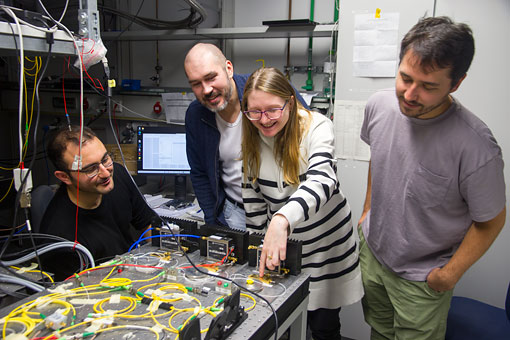
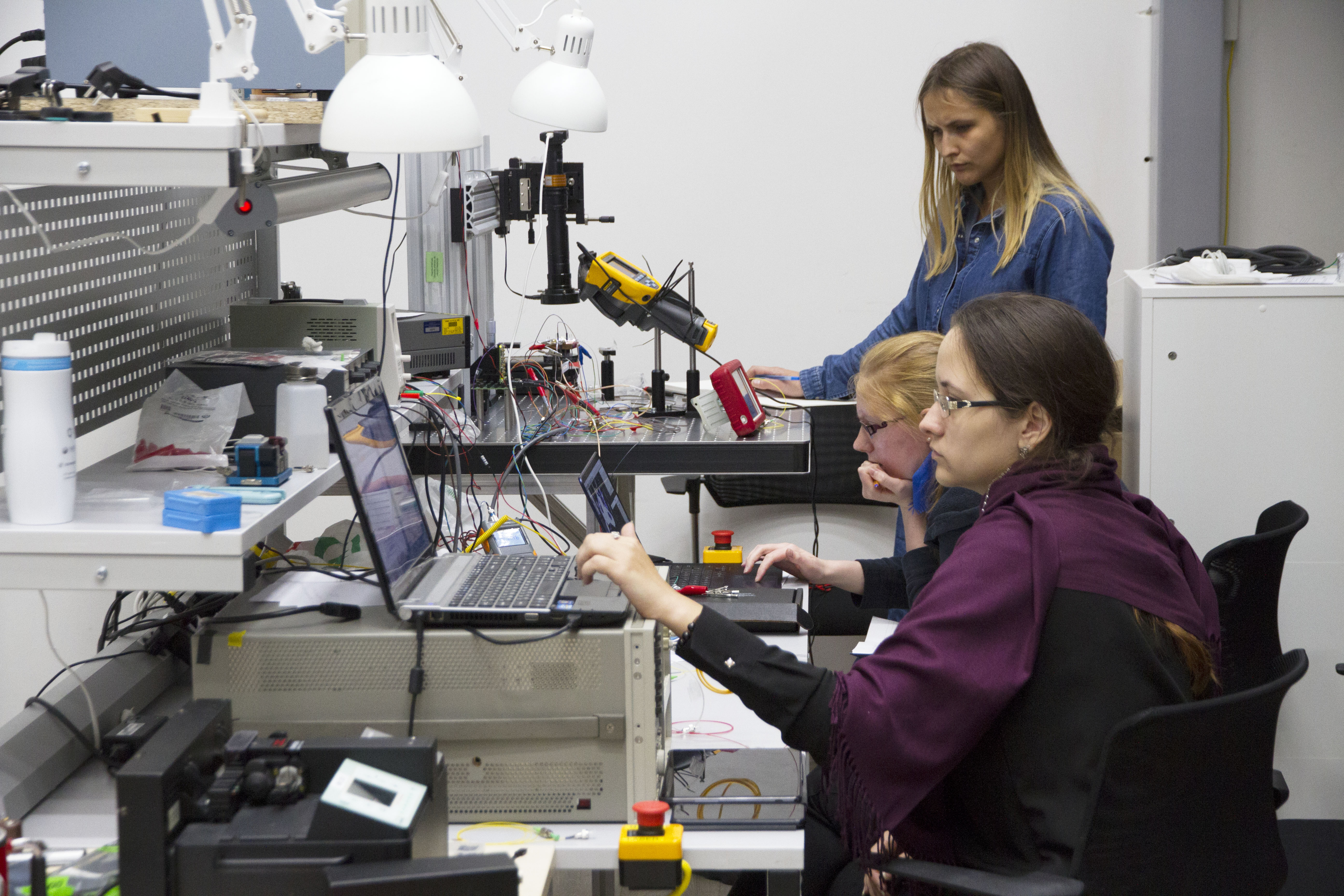
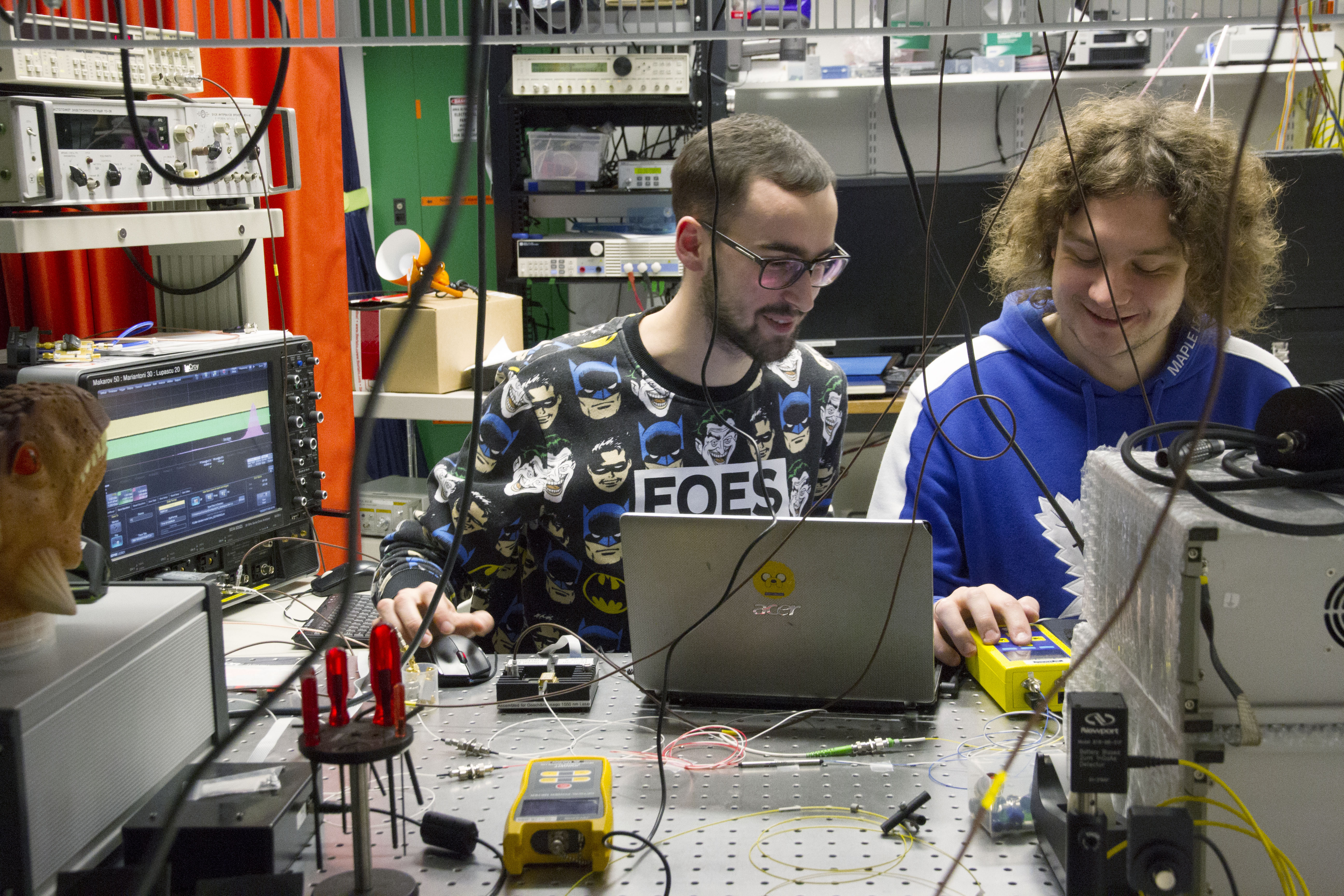
| |  | One of our Master students tunes up eavesdroppers setup in a large pulse attack experiment | |
|
|
Hacking other peoples hardware is certainly exciting, but we
also want to have our own quantum cryptosystem in the lab, and try to make
it right. We have a fiber-optic system from older experiment, which we
plan to significantly upgrade and harden against attacks in the coming
year.
Distinguishing quantum states
Non-orthogonal quantum states cannot be reliably distinguished by a measurement.
This uncertainty limits the amount of information Alice can send Bob using non-orthogonal qubits.
We are trying to find measurements which distinguish non-orthognal states with the smallest probability of error,
and measurements which optimizes Alices and Bobs mutual information.
Collaborations
We have active partnership (i.e., visits, information exchange) with
|
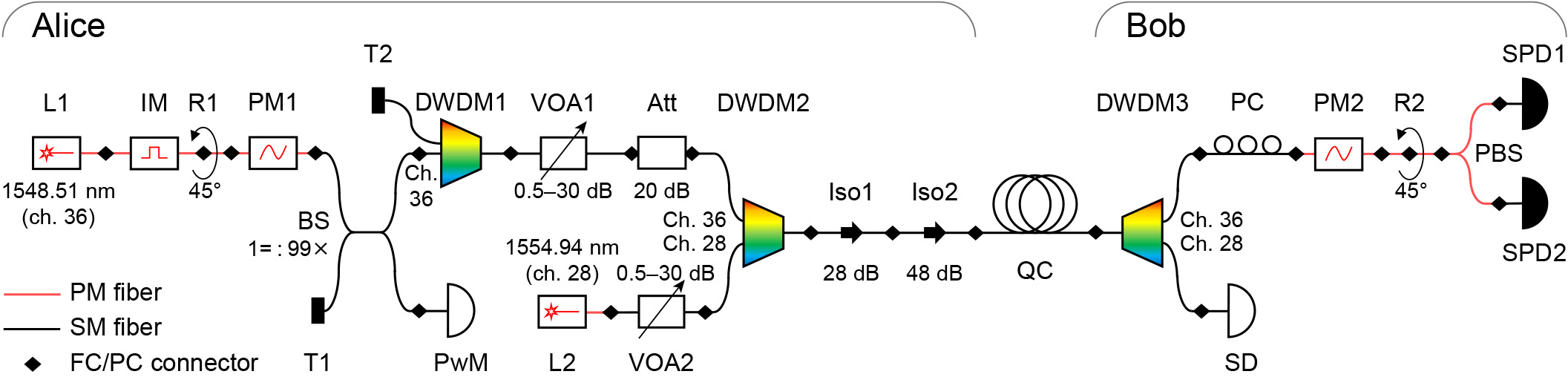
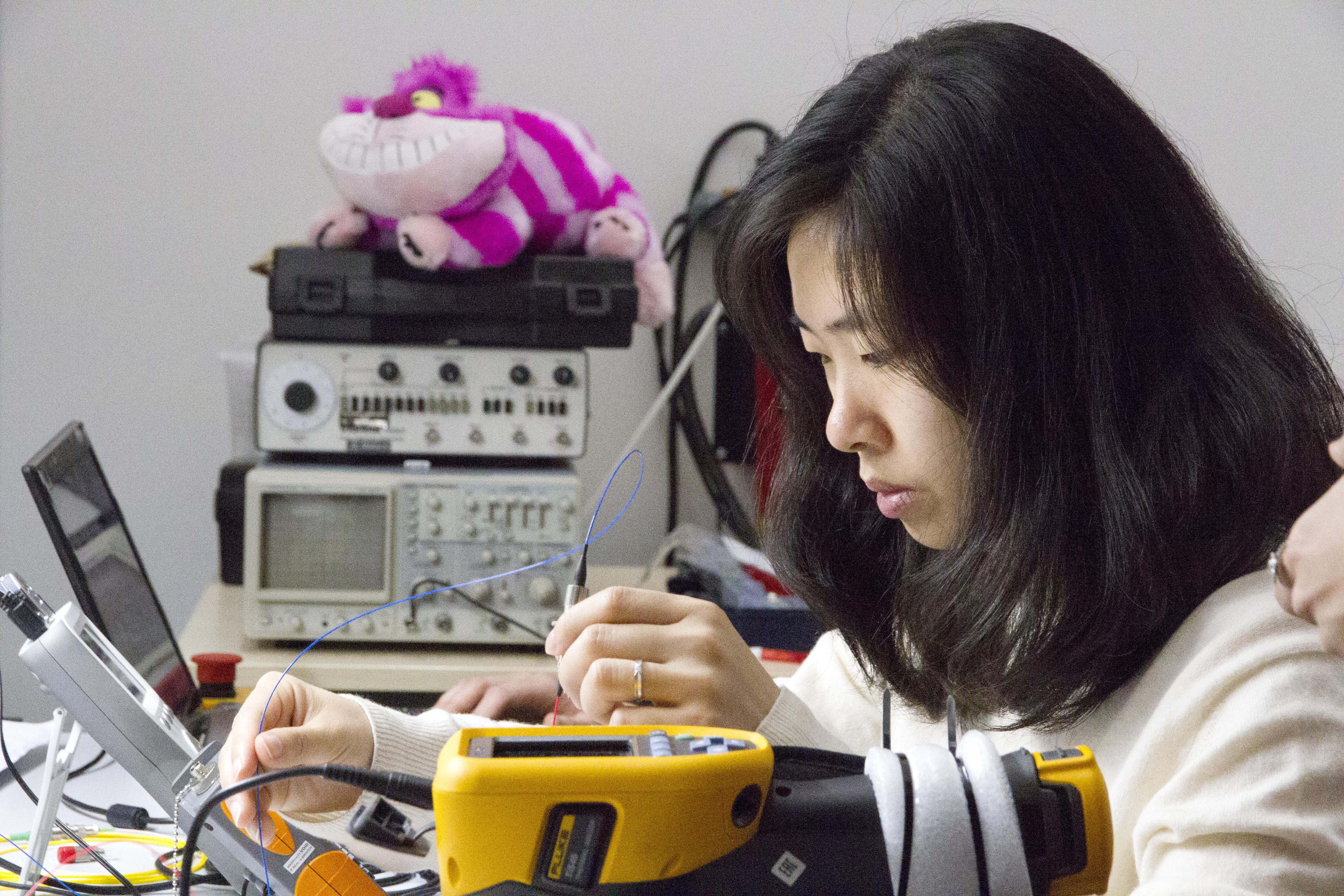
| |  | Alices optical setup in the quantum key distribution experiment | |
|
| |
|
| |  |
| | |